A margin warning can arrive even when the market has not reached the stop-loss level you planned. That feels confusing only if margin, position risk and account equity are treated as the same number. They are not.
In leveraged forex trading, margin is collateral, equity moves with open profit and loss, and margin level is a percentage the broker may use to decide whether positions can remain open. The exact warning and forced-close thresholds depend on the broker, account and jurisdiction.
The three numbers to separate before opening a position
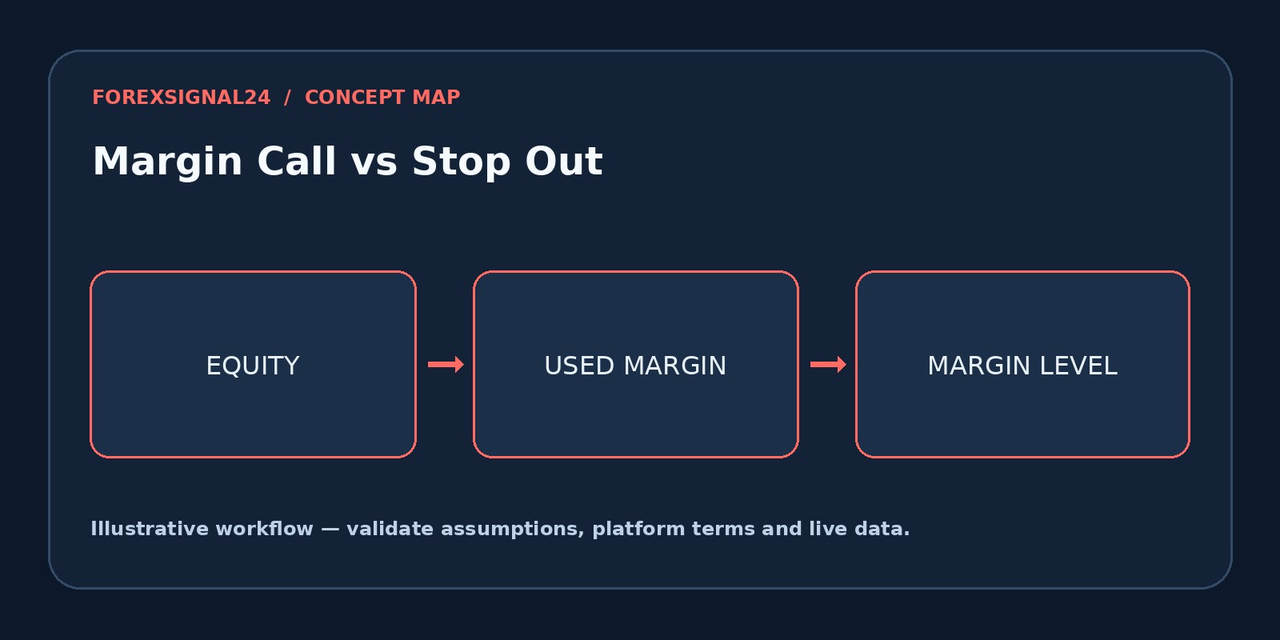
- Equity is account balance plus floating profit or loss, adjusted for relevant charges.
- Used margin is the amount allocated to maintain the open positions under the broker’s calculation.
- Free margin is equity minus used margin. Margin level is equity divided by used margin, multiplied by 100, when used margin is positive.
A position-size estimate answers how much money a given price move might cost. A margin calculation answers whether the broker is likely to let you open or maintain the position. Use the ForexSignal24 Margin Calculator alongside, not instead of, a stop-based risk budget.
Worked example: a falling margin level
Consider a hypothetical USD account. Assume the platform has allocated $1,000 as used margin across open trades. The broker’s hypothetical margin-call threshold is 100% and its stop-out threshold is 50%. These percentages are examples, not universal broker rules.
| Account equity | Used margin | Free margin | Margin level |
|---|---|---|---|
| $1,500 | $1,000 | $500 | 150% |
| $1,000 | $1,000 | $0 | 100% |
| $750 | $1,000 | −$250 | 75% |
| $500 | $1,000 | −$500 | 50% |
At the 100% level in this model, a warning may appear and new orders may be restricted. At 50%, the broker may begin closing positions automatically. Liquidation sequencing, price gaps, spreads and commission can change the actual outcome. The platform may not close exactly where the simplified table suggests.
Why a stop loss does not guarantee protection against stop-out
Suppose several correlated trades are open. A trader sets an individual stop on each, but a sharp market move affects all positions simultaneously. Equity falls while spread widening may temporarily magnify unrealized losses. A broker’s automated stop-out mechanism can act before the intended individual stops are filled.
Other routes to a lower margin level include opening additional trades, holding positions through adverse swaps, using high leverage and maintaining overlapping exposure to the same currency. In fast markets, stop orders can also slip.
This is why the more useful planning sequence is to choose the amount you are prepared to lose, size each trade using its stop distance, and only then check margin. The Position Size Calculator supports the risk part of that process.
A pre-trade checklist that actually helps
Before trading, read your broker’s own definitions of margin call, stop out, margin calculation and negative balance protection. These may differ among instruments and entities of the same brokerage group. Then check your combined positions rather than treating each one as independent. A 1% risk target per trade can still become a large account-wide exposure when many trades depend on the same market event.
Do not fund a stressed account simply to avoid being stopped out without reconsidering the trading thesis. Adding cash changes the margin level; it does not make the original risk disappear. The CFTC’s retail forex advisory explains how leverage can amplify losses and why account agreements matter.
Common questions
Is a margin call the same as a stop-out?
No. A margin call generally indicates a margin deficiency or warning condition. Stop-out describes forced closure under the broker’s rules. The two thresholds, and even whether an explicit warning occurs, depend on the provider.
Does lower leverage automatically mean a safer trade?
Not by itself. Lower leverage can constrain the maximum position size or require more margin, but monetary risk still depends on trade size, stop distance, execution and combined positions.
Bottom line: measure both market risk and margin capacity. Neither calculation substitutes for the other.
Risk notice: Leveraged forex and CFD trading can cause substantial losses. The figures and examples are educational, not current quotes, investment advice or predictions. Verify instrument terms independently.