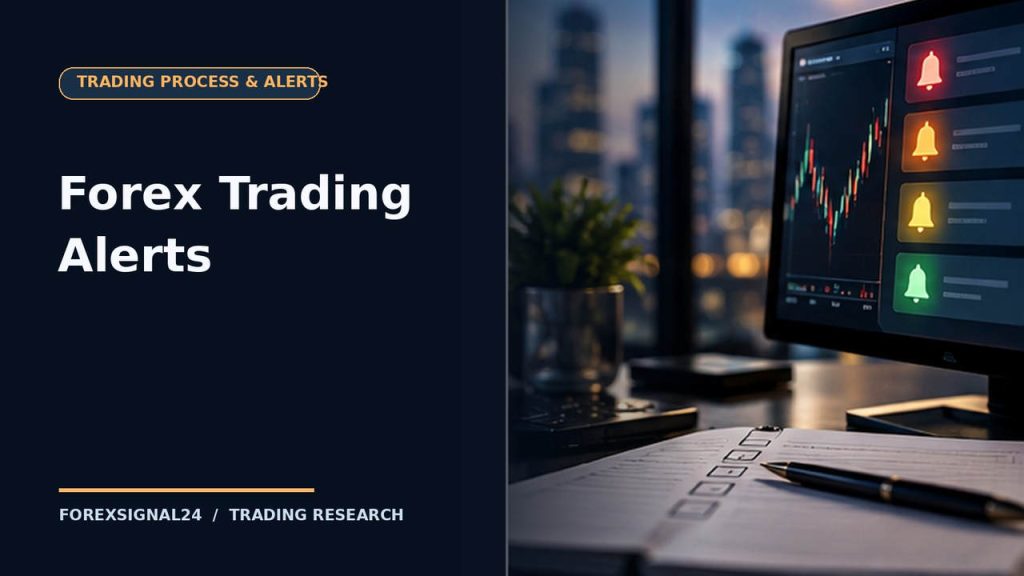
A phone notification can be useful without being a reason to trade. A breakout alert, indicator crossover or AI-generated market summary only tells you that something matched a rule—or that a system thinks it did. It does not automatically tell you whether the trade fits your risk budget.
The strongest alert workflow puts a short review between notification and order. That extra step is particularly important in leveraged forex and CFD markets, where execution costs and market conditions can change quickly.
Define what the alert actually means
A good alert has explicit conditions: instrument, timeframe, observable price or indicator level, expiration, and whether the condition is checked on a closed candle or while the bar is forming. If the alert is vague, two traders can interpret it differently and there is no reliable way to backtest it.
A rule such as ‘EUR/USD closes above the prior session high on the 15-minute chart’ is more testable than ‘strong bullish momentum.’ Yet even a precise rule needs context: spreads, scheduled announcements, stop placement and expected reward.
The five-question decision filter
- Source: Did this come from my own configured alert, a third-party signal service, or an AI summary?
- Market conditions: Is there an economic release or poor liquidity affecting spreads and fills?
- Risk: Where would the trade become invalid, and how much could I lose at that point?
- Cost: Is the expected move large enough relative to spread, commission and possible slippage?
- Process: Does this alert match the tested playbook, or am I improvising because the notification feels urgent?
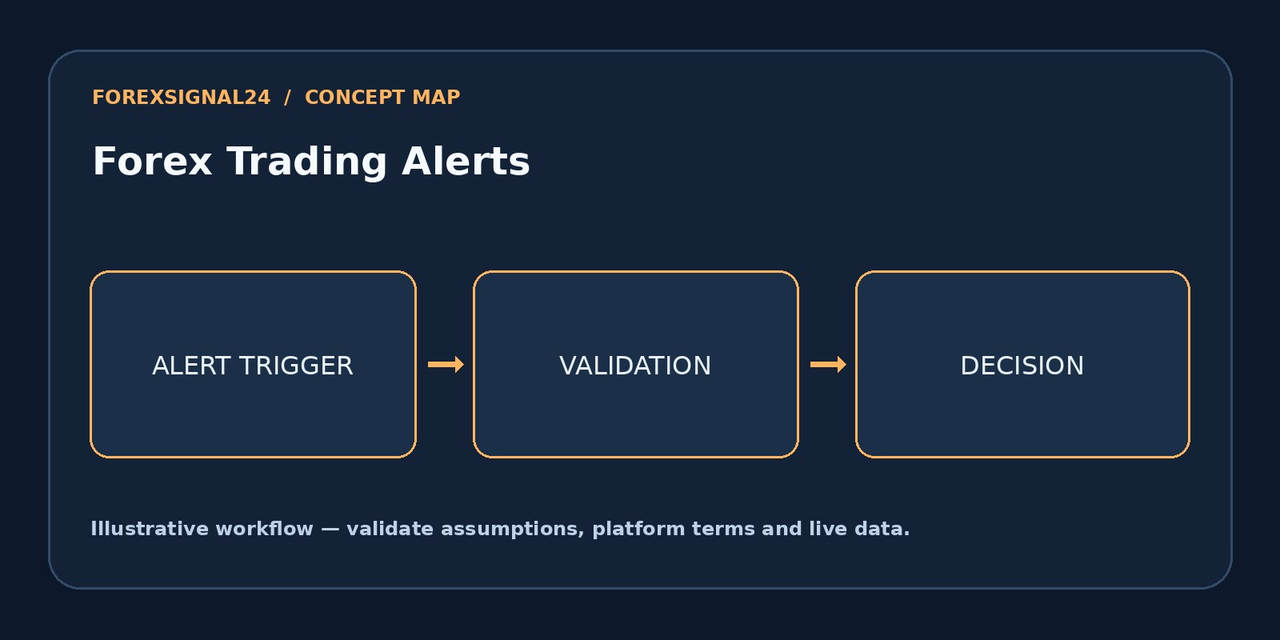
Example: a breakout notification at the wrong time
Imagine a price alert that triggers shortly before a scheduled central-bank release. The chart pattern may meet your technical rule, but the event can change spread and slippage assumptions. The disciplined choice might be to wait, reduce the planned size or skip the setup entirely.
The Market Sessions tool and Market Data & Calendar are useful checks before acting. The alert should carry the trader into a decision process, not bypass it.
Where AI can help—and where it should stop
AI is helpful at turning your written rules into a structured checklist, comparing two versions of a plan, or summarizing a journal entry. It may also help classify alerts after the fact if you provide a consistent dataset. But it can misunderstand screenshots, fabricate a technical explanation, or rely on stale price data. Do not assume it sees the broker’s live executable quote.
Keep API keys, account credentials and private information out of prompts. If automation is involved, separate read-only analysis from any action that could place an order. An alert-review assistant is easier to audit than a system allowed to trade autonomously.
Keep the workflow measurable
Record the timestamp, trigger, market conditions, planned stop, expected reward, estimated cost, action taken, and subsequent outcome. Over time, this lets you ask whether alerts improve decisions or simply create more transactions.
The site’s Risk/Reward Calculator is a practical final check after identifying the potential entry and invalidation price.
Common questions
Is a forex alert the same as a trading signal?
Not necessarily. An alert is a notification that a condition occurred. A signal may imply an action. Neither guarantees a profitable result.
Should every alert lead to a trade?
No. Skipping a setup because conditions differ from the playbook is a valid and measurable decision.
The objective is not more alerts. It is a more consistent decision process after an alert arrives.
Risk notice: Leveraged forex and CFD trading can cause substantial losses. The figures and examples are educational, not current quotes, investment advice or predictions. Verify instrument terms independently.